Early-to-Mid Career Research Conference 2026

Submit an abstract

We invite abstract submissions aligned with the conference sub-themes. Refer to the information below for instructions and formatting. Submissions close 12 August 2026.

Submit an abstract

Instructions and abstract formatting guidelines

Showcase presentation

Showcase of research, practice, leadership and policy submissions can be on any aspect of research and development in higher education. Showcase presentations will be evidence-based and not only outline the research, initiative or practice being showcased but, equally, provide clear evidence of its outcomes or its effectiveness. Quantitative and qualitative evidence of effectiveness are equally acceptable.

An abstract with a maximum of 300 words must be submitted for review of both showcase and poster presentations. The abstract should be entered directly into the text box provided in the submission portal below and must NOT contain any information that could identify the author(s). The abstract MUST address the following headings: 

  • Background and context, including relevant literature, policy, industry, practice, or disciplinary context where appropriate
  • Description of the research, project, initiative, practice, or creative work
  • Approach, methodology, methods, or process of inquiry/implementation
  • Key findings, outcomes, insights, or impact
  • Contribution to knowledge, scholarship, professional practice, industry, community, or society

The abstract will be published in the conference program. If accepted for presentation, you may be asked to make edits to the abstract before it is published.

Each showcase presentation will run for 12 minutes, including a 3-minute Q&A session.

Formatting guidelines

  • Abstracts must be typed directly into the text box provided in the submission portal and not exceed 300 words
  • Do not include the author names and affiliations in the abstract (these details will be captured during the online submission process)
  • Do not include the abstract title in the abstract (this will be captured separately during the online submission process)
  • All text should be entered in sentence case (do not type in CAPITAL LETTERS)
  • Do not include any tables or images in the abstract
  • APA7 referencing is required (guide) and must be typed directly into the text box provided and not exceed 300 words. 

Review criteria 

Abstracts for showcase presentations will be reviewed against the following criteria:

  • Relevance to sub-theme
  • Description of the research, initiative or practice
  • Contribution to scholarship and/or practice
  • Clarity and standard of writing 

Presenter eligibility

  • An early career or mid-career researcher (ECR/MCR) within 12 years of the conferral of their PhD (or equivalent), and/or within the first 8–12 years of their initial academic or research appointment.
  • A current PhD candidate who is employed in an academic, research, or professional role at a university or research institution.
  • We recognise that career pathways vary and may include career interruptions, part-time employment, parental leave, industry experience, or other circumstances. Accordingly, some flexibility may be applied when assessing eligibility. Please contact emcr-conference@uow.edu.au for further information.
Poster

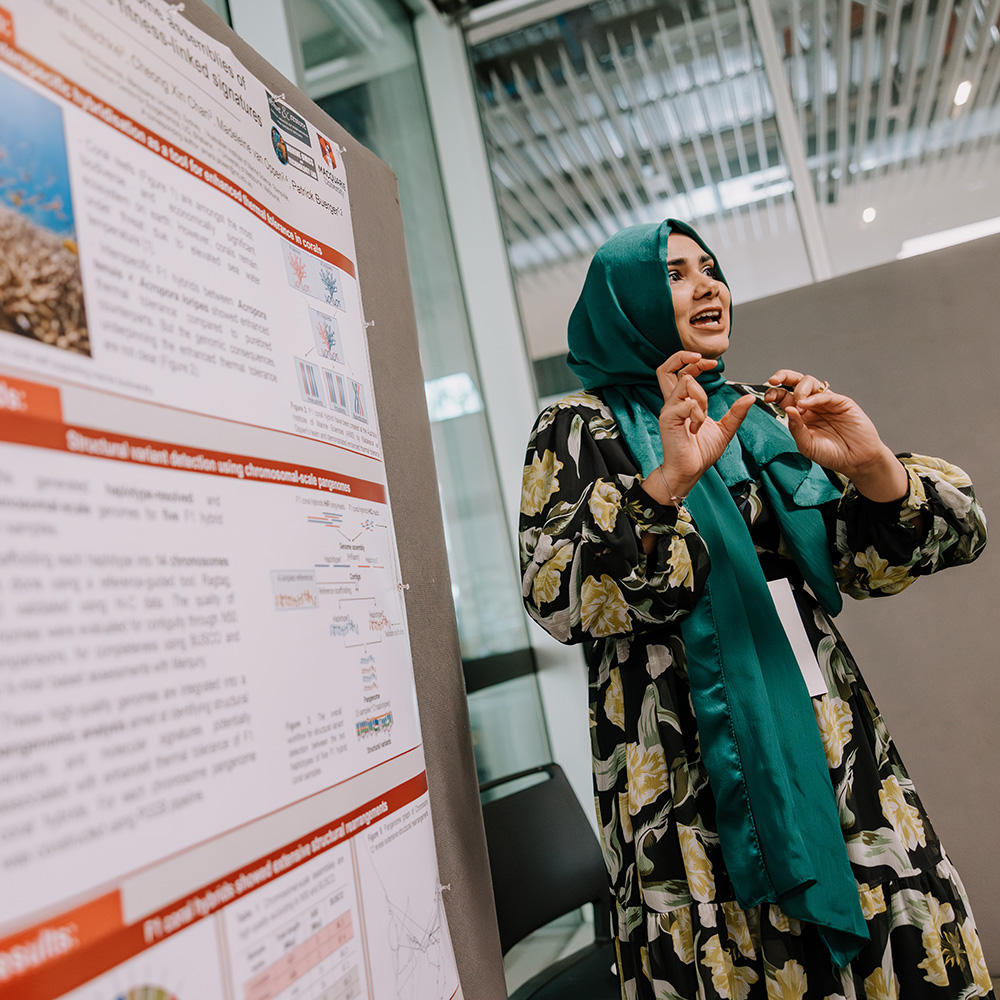
Submissions for a Poster can be on any aspect of research and development in higher education. Posters will be evidence-based and make appropriate references to the literature. A Poster allows participants with similar interests to interact by using the poster as a discussion point.

At this conference, all poster authors will be encouraged to provide both a hard-copy printed poster for onsite and a digital poster for the online portal. 

An onsite poster should consist of one single A0 size page in PORTRAIT format (poster must not exceed 841mm wide x 1189mm high).

An abstract with a maximum of 300 words must be submitted for review for both showcase and poster presentations. The abstract should be entered directly into the text box provided in the submission portal below and must NOT contain any information that could identify the author(s). The abstract MUST address the following headings: 

  • Background and context, including relevant literature, policy, industry, practice, or disciplinary context where appropriate
  • Description of the research, project, initiative, practice, or creative work
  • Approach, methodology, methods, or process of inquiry/implementation
  • Key findings, outcomes, insights, or impact
  • Contribution to knowledge, scholarship, professional practice, industry, community, or society

The abstract will be published in the conference program. If accepted for presentation, you may be asked to make edits to the abstract before it is published.

Posters will be available for viewing during a dedicated interactive poster session, where authors can discuss their poster with other delegates.

Prizes will be awarded for the best poster in the printed onsite format as voted by conference delegates. All votes cast for the winner must be associated with a UOW email address to count in the voting process.

Formatting guidelines

  • Abstracts must be typed directly into the text box provided in the submission portal and not exceed 300 words
  • Do not include the author names and affiliations in the abstract (these details will be captured during the online submission process)
  • Do not include the abstract title in the abstract (this will be captured separately during the online submission process)
  • All text should be entered in sentence case (do not type in CAPITAL LETTERS)
  • Do not include any tables or images in the abstract
  • APA7 referencing is required (guide) and must be typed directly into the text box provided and not exceed 300 words.

Review criteria

Abstracts for Posters will be reviewed against the following criteria:

  • Relevance to sub-theme
  • Description of the research, initiative or practice
  • Contribution to scholarship and/or practice
  • Clarity and standard of writing

Presenter eligibility

  • An early career or mid-career researcher (ECR/MCR) within 12 years of the conferral of their PhD (or equivalent), and/or within the first 8–12 years of their initial academic or research appointment.
  • A current PhD candidate who is employed in an academic, research, or professional role at a university or research institution.
  • We recognise that career pathways vary and may include career interruptions, part-time employment, parental leave, industry experience, or other circumstances. Accordingly, some flexibility may be applied when assessing eligibility. Please contact emcr-conference@uow.edu.au for further information.
Collaborative Research Panel

Collaborative Research Panels provide an opportunity for teams of researchers, practitioners, leaders, and policy contributors to present interconnected work addressing a common theme, challenge, project, or area of inquiry in research. Panels should demonstrate how individual presentations contribute to a broader body of work, shared initiative, or collaborative research agenda. Submissions should be evidence-based and clearly articulate the contribution of each presenter, while highlighting the collective insights, outcomes, and impact of the panel.

A Collaborative Research Panel consists of three speakers, including a nominated panel moderator. Each speaker will present a distinct aspect of the shared theme or project (approximately 10 minutes per presentation), followed by a moderated discussion and audience Q&A (15 min).

An abstract (maximum 300 words) must be submitted for review for roundtable discussions. The abstract should be submitted as text and typed directly into the text box provided in the submission portal:

  • Theme and Context – the central theme, question, challenge, or issue to be explored, including relevant literature, policy, industry, practice, disciplinary, or institutional context.
  • Panel Description – how the presentations are connected, the rationale for bringing the speakers together, and the distinct perspective or contribution of each speaker.
  • Key Insights and Contribution – the key findings, innovations, emerging issues, or areas for discussion arising from the collective work, and their contribution to knowledge, scholarship, professional practice, policy, industry, community, or society.
  • Audience Engagement – how discussion, interaction, and participation will be facilitated during the panel session.

The abstract will be published in the conference program. If accepted for presentation, you may be asked to make edits to the abstract before it is published.

Formatting guidelines

  • Abstracts must be typed directly into the text box provided in the submission portal and not exceed 300 words
  • Do not include the author names and affiliations in the abstract (these details will be captured during the online submission process)
  • Do not include the abstract title in the abstract (this will be captured separately during the online submission process)
  • All text should be entered in sentence case (do not type in CAPITAL LETTERS)
  • Do not include any tables or images in the abstract
  • APA7 referencing is required (guide) and must be typed directly into the text box provided and not exceed 300 words.

Review criteria

Abstracts for Collaborative Research Panel discussions will be reviewed against the following criteria:

  • Relevance
  • Potential to engage delegates in a rigorous discussion/debate
  • Clarity and standard of writing.

Presenter eligibility

  • An early career or mid-career researcher (ECR/MCR) within 12 years of the conferral of their PhD (or equivalent), and/or within the first 8–12 years of their initial academic or research appointment.
  • A current PhD candidate who is employed in an academic, research, or professional role at a university or research institution.
  • We recognise that career pathways vary and may include career interruptions, part-time employment, parental leave, industry experience, or other circumstances. Accordingly, some flexibility may be applied when assessing eligibility. Please contact emcr-conference@uow.edu.au for further information.